





Belgium’s SAF Revolution:
LanzaTech Selects Ghent for Europe’s First
Commercial ATJ Plant — 79,000 Tonnes/Year of eSAF
✈️ Production & Projects · May 17, 2026 · e-saf.ai
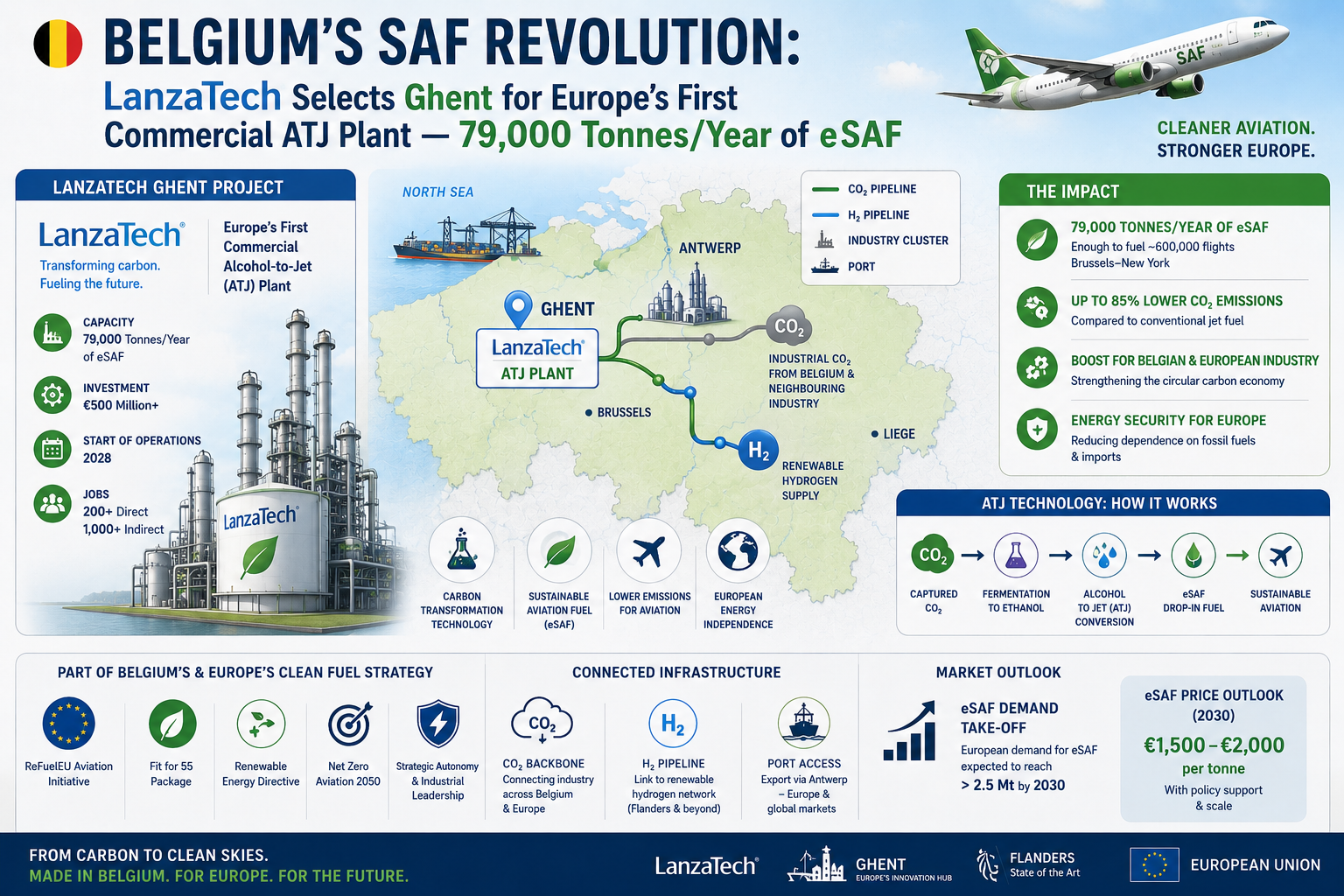
On May 11, 2026, LanzaTech Global confirmed one of the most significant SAF announcements of the year: North Sea Port in Ghent, Belgium has been selected as the permanent site for the FLITE project — Europe’s first commercial-scale Alcohol-to-Jet (ATJ) Sustainable Aviation Fuel facility. The €500 million plant will produce 79,000 tonnes of SAF and 9,000 tonnes of renewable diesel annually, making it one of the most significant eSAF developments in Europe’s push to meet ReFuelEU Aviation mandates. This article covers everything eSAF professionals need to know about the Ghent project, its regulatory compliance, feedstock logistics and timeline.
The FLITE Project — What It Is and Why It Matters
The FLITE consortium (Fuel via Low carbon Integrated Technology from Ethanol) is backed by EU Horizon 2020 funding and led by LanzaTech Global (NASDAQ: LNZA). The facility will use the LanzaJet Alcohol-to-Jet (ATJ) process to convert ethanol into sustainable aviation fuel and renewable diesel at industrial scale.

Location Advantages — Why North Sea Port, Ghent
The selection of North Sea Port was not accidental. Several structural advantages make Ghent the ideal location:
ArcelorMittal Steelanol proximity — The ethanol feedstock plant is located directly across the canal from the FLITE site. This eliminates long-distance feedstock transport and reduces supply chain risk and cost significantly.
Existing port infrastructure — North Sea Port has mature fuel logistics, multimodal transport (sea, barge, rail, road) and existing utilities infrastructure that dramatically reduce project development risk and cost.
Cross-border connectivity — North Sea Port spans a 60-kilometre corridor from the North Sea through the Netherlands into Belgium — providing direct access to European SAF distribution networks and offshore export routes.
Skilled workforce — Belgium’s chemical and energy sector workforce provides the technical expertise needed for ATJ operations. Source: North Sea Port official · LanzaTech official May 11, 2026.
Regulatory Compliance — CORSIA, ReFuelEU and UK SAF Mandate
The FLITE SAF is designed to meet all three major international regulatory frameworks simultaneously — a significant commercial advantage as airlines operate globally and need multi-jurisdictional compliant fuel:
CORSIA (Carbon Offsetting and Reduction Scheme for International Aviation) — ICAO’s global carbon reduction mechanism for international aviation.
ReFuelEU Aviation — EU Regulation 2023/2405 — binding SAF blending mandates for all flights departing EU airports: 2% (2025) → 6% (2030) → 70% (2050).
UK SAF Mandate — UK Department for Transport — 2% (2025) → 9.5% (2030) → 75% (2050).
Project Timeline
LanzaTech officially announces North Sea Port, Ghent as FLITE site. Environmental Impact Assessment scoping notification to be submitted imminently to Belgian authorities. Source: LanzaTech official — verified.
EIA process, permitting, investor engagement, financial close. FEED substantially complete. Feedstock supply LOIs in place. Offtake frameworks established.
~300 FTE construction positions throughout the build period. Plant commissioning and startup testing.
~50 permanent high-quality jobs. Full production at design capacity. SAF supplied to airlines operating from Belgian and Dutch airports via North Sea Port logistics network.