








A National Industrial Opportunity Takes Shape
Canada enters the SAF race with structural advantages: vast agricultural feedstock resources, established refining infrastructure, hydroelectric power for green hydrogen co-processing, and proximity to one of the world’s largest aviation markets. The Airbus-ICF study frames these assets not merely as environmental credentials but as a coherent industrial policy case, arguing that the country can build a globally competitive SAF export and domestic supply chain if policy frameworks and investment decisions are accelerated now.
The $32 billion GDP figure covers the full value chain — feedstock cultivation and collection, conversion and refining, logistics, and the aviation operations that would benefit from lower-cost, domestically sourced fuel. It underscores that SAF is not simply a fuel-swap but an economic development programme spanning agriculture, chemicals, energy and aerospace manufacturing.
40% Demand Coverage: Ambitious but Achievable
Meeting 40% of Canadian aviation fuel demand with SAF by 2040 would require a dramatic ramp-up from today’s negligible volumes, but the study’s timing — presented to an international aerospace audience at Farnborough — signals that OEMs and airlines are now treating such targets as engineering and investment problems rather than aspirational rhetoric. Airbus, which has been certifying its entire commercial aircraft family to fly on 100% SAF-blend-compatible specifications, has a direct commercial interest in stimulating the supply side of the market; without scalable fuel supply, aircraft orders remain exposed to long-term carbon-cost risk.
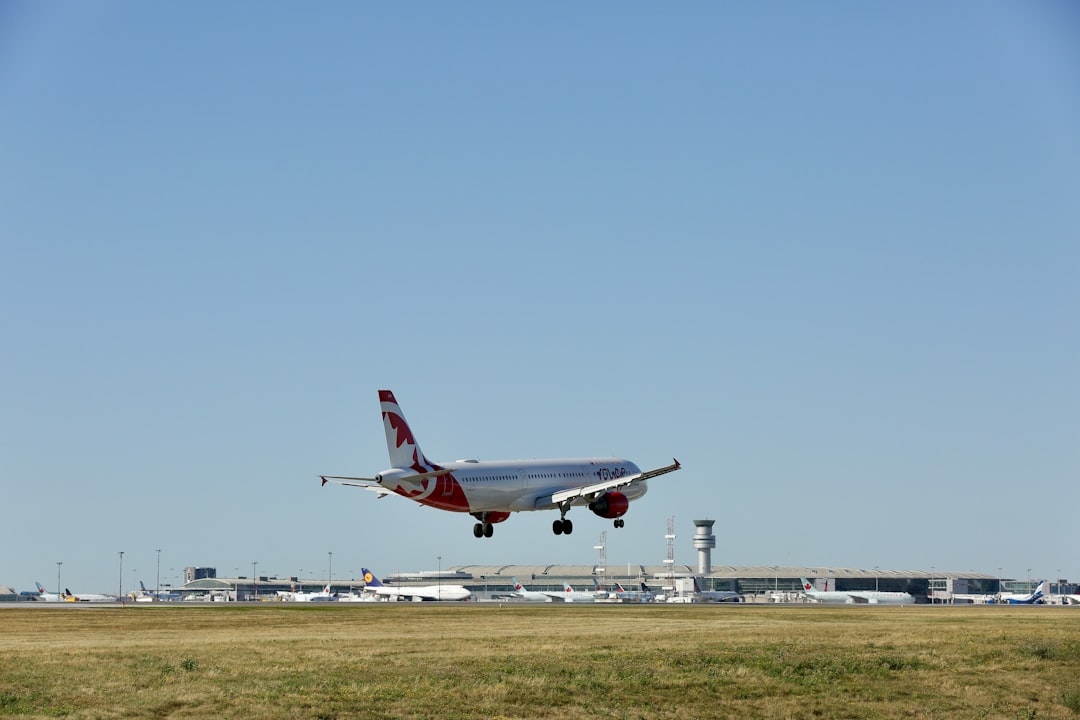
Airlines operating trans-Atlantic and trans-Pacific routes through Canadian hubs stand to benefit disproportionately. AI-assisted flight-planning tools, increasingly deployed by carriers to optimise routing, altitude and speed profiles, can compound the emissions benefit of SAF blends by trimming residual fossil fuel burn — meaning the GDP and carbon gains projected in the study are, if anything, conservative when software-driven efficiency is factored in.
Farnborough as a Policy Signal, Not Just a Trade Show
Choosing Farnborough as the launch venue was deliberate. The world’s premier aerospace trade event draws the procurement decision-makers, government ministers and financiers who must align for a national SAF programme to move from study to shovels in the ground. The Airbus-ICF presentation effectively issued a call to action: Canada has the feedstocks, the technical capability and — if the study’s numbers hold — the economic incentive to act before competing jurisdictions lock up global SAF investment flows.
For the broader synthetic-fuels ecosystem, the Canadian study reinforces a pattern visible across the Atlantic and Pacific: governments and OEMs are converging on SAF not as a niche compliance tool but as the primary near-term decarbonisation lever for commercial aviation, with long-term hydrogen and e-fuel pathways complementing rather than replacing it within the 2040 window.
Sources
- Annual Conference 2026 – Belgian Hydrogen Council
- Your EU – Your Projects in Belgium: accelerating hydrogen
Featured image via Unsplash.