Twelve Opens First US Commercial eSAF Plant in Moses Lake
Twelve’s AirPlant One in Moses Lake, Washington becomes the first commercial-scale US facility to produce electrosynthetic sustainable aviation fuel from CO₂ and renewable electricity.









Twelve’s AirPlant One in Moses Lake, Washington becomes the first commercial-scale US facility to produce electrosynthetic sustainable aviation fuel from CO₂ and renewable electricity.
A new Airbus and ICF study unveiled at Farnborough Air Show finds that a thriving Canadian SAF value chain could contribute $32 billion to national GDP by 2040 if sustainable aviation fuel meets 40% of the country’s aviation fuel demand.
A joint Airbus and ICF study presented at Farnborough Airshow finds that a fully developed Canadian SAF value chain could cover 40% of the country’s aviation fuel demand by 2040 while generating a $32 billion GDP contribution.

A joint Airbus and ICF study unveiled at Farnborough 2026 finds that scaling Canadian sustainable aviation fuel production to 40% of national aviation fuel demand by 2040 could deliver a $32 billion boost to Canada’s GDP.
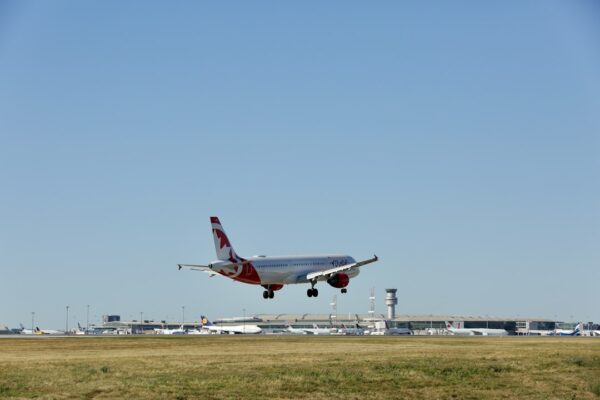
An Airbus and ICF study unveiled at Farnborough 2026 finds that a thriving Canadian SAF industry could contribute $32 billion to GDP and satisfy 40% of aviation fuel demand by 2040.

As CO₂ utilisation plants scale to feed maritime e-methanol demand, aviation eyes the same infrastructure for future drop-in synthetic fuels and AI-optimised blend logistics.

The HY4Link cross-border hydrogen pipeline linking Belgium, Luxembourg, Germany and France has set a 2030 commercial launch date with 30 TWh annual throughput.

The HY4Link hydrogen pipeline project across the Greater Region has seen no significant announcements in recent weeks, though aviation stakeholders continue monitoring hydrogen infrastructure development.

White hydrogen drilling projects worldwide are drawing renewed industrial interest as aviation explores hydrogen pathways alongside SAF and e-fuels.

White hydrogen exploration remains quiet in May 2026 as aviation and transport sectors await commercial-scale projects that could reshape fuel supply chains.