









From Approval to Infrastructure: What Phase 1 Delivers
The Luxembourg Council of Government’s adoption of HY4Link Phase 1 transforms the project from a cross-border ambition into a formally sanctioned infrastructure commitment.[3] The 40 km Thionville–Pétange segment is the first operational slice of a corridor that will ultimately span approximately 230 km through France, Luxembourg, Belgium and Germany — the four nations of the Greater Region.[1] For project developers and off-takers, governmental approval at this stage is the trigger for detailed engineering, permitting timelines and, critically, bankable offtake structuring.
The pipeline’s strategic value lies in its ability to link future green hydrogen production capacity — including large-scale electrolysis projects being developed across the Greater Region — with industrial and transport end-users. For the aviation sector, that matters: hydrogen delivered by dedicated backbone infrastructure is a prerequisite for the cost-competitive production of RFNBO-compliant fuels that ReFuelEU Aviation mandates from 2030 onward.
Regulatory Compliance Angle: RED III, ReFuelEU and the RFNBO Supply Chain
RED III’s RFNBO additionality, temporal and geographic correlation rules impose strict conditions on how green hydrogen can be credited. A dedicated pipeline such as HY4Link provides physical traceability — a structural advantage over hydrogen injected into mixed gas grids when demonstrating compliance with the geographic correlation requirement. For airlines and fuel suppliers filing compliance calendars for the 2030–2032 obligation windows under ReFuelEU Aviation, locking in infrastructure with demonstrable cross-border hydrogen provenance is not a marginal consideration; it is a core supply-chain risk-management task.
Beyond aviation, the pipeline feeds directly into the broader transport decarbonisation stack: hydrogen for heavy road transport and rail, e-fuel production facilities requiring a stable H₂ feedstock, and potentially future maritime bunkering hubs accessible via the Moselle waterway corridor. Compliance and marketing directors should note that infrastructure with a confirmed Phase 1 approval now carries a materially different bankability profile than projects still at feasibility stage — relevant to any CBAM or state-aid due-diligence exercise.
Aviation and Transport Connectivity: The Bigger Picture
Green hydrogen has dual relevance to aviation decarbonisation: as a direct propulsion medium for hydrogen-powered aircraft programmes, and as the primary feedstock for Power-to-Liquid e-kerosene. The efficiency argument for e-fuels in road transport — where the ICCT documents a well-to-wheel efficiency of roughly 16% for the e-fuel pathway versus 72% for battery-electric vehicles — is a genuine constraint that makes direct electrification preferable for cars and vans. Aviation, however, operates in a domain batteries cannot currently serve at scale, making hydrogen-derived fuels the practical decarbonisation vector for long-haul flights. Infrastructure such as HY4Link that reduces hydrogen transmission costs and assures RFNBO provenance therefore has a direct bearing on the economics of SAF produced within the Greater Region.
The ~230 km ultimate corridor will also cross some of Europe’s most hydrogen-active industrial zones.[1] Timing matters: construction lead times on pipeline infrastructure mean that Phase 1 approval today maps onto operational capacity in the 2029–2031 window — precisely when the first meaningful ReFuelEU Aviation RFNBO sub-mandates bite.[2]
Sources
- Luxembourg approves first phase of the Hy4Link Hydrogen Pipeline
- Luxembourg Approves HY4Link Phase 1 Hydrogen Pipeline Project
- Hydrogen: the government approves a 40km gas pipeline
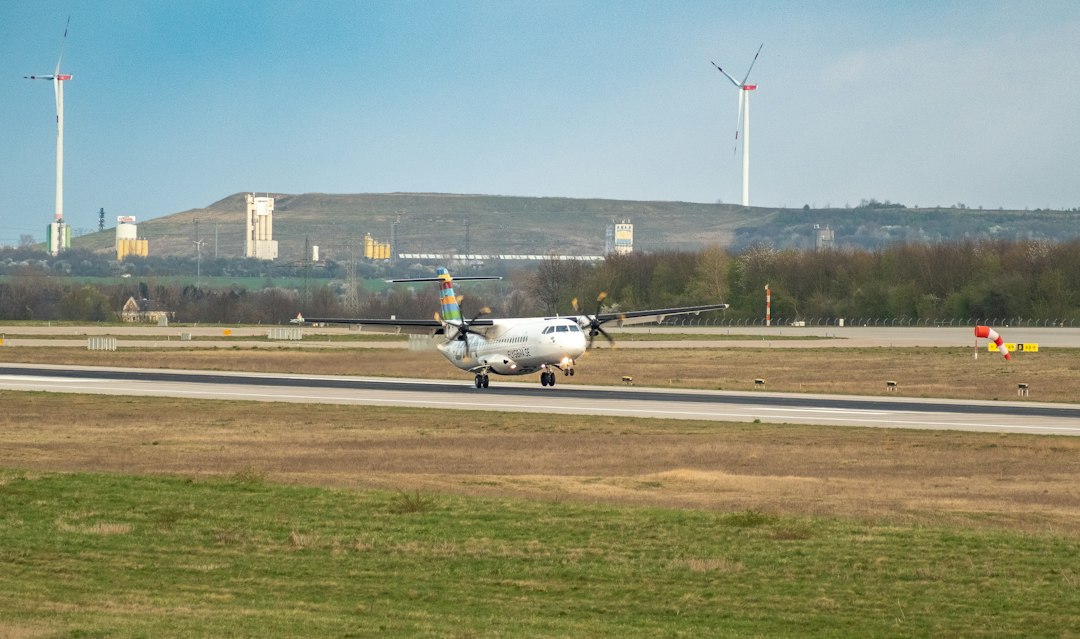
Featured image via Unsplash.
This is not an official site. It is published by a private company and does not emanate from any public authority, institutional programme, government department or research organisation. It represents none of them and speaks for none of them in any capacity.
Nature of the content. Articles are documentary summaries drawn from cited public sources. They may contain inaccuracies, omissions or information that has since become outdated. No financial, technical, legal or investment advice is provided.
Always verify against primary sources. For any information concerning a public programme, a regulation or an institutional project, only the publications of the competent authority are authoritative.
© 2026 BESS Energie SRL · BCE 0698.949.732 · info@bess.be